THE SITUATION
Define the boundary and the work taking place nearby.
Visual marking helps identify a planned boundary, but it cannot physically stop a person from crossing it. Consider its role within the wider site protection plan.
FIND THE RIGHT APPROACH
Review permanent visual boundary marking.
Start with the site layout and the task. Your safety team should determine where visual marking is appropriate and where a physical barrier or other protection is needed.
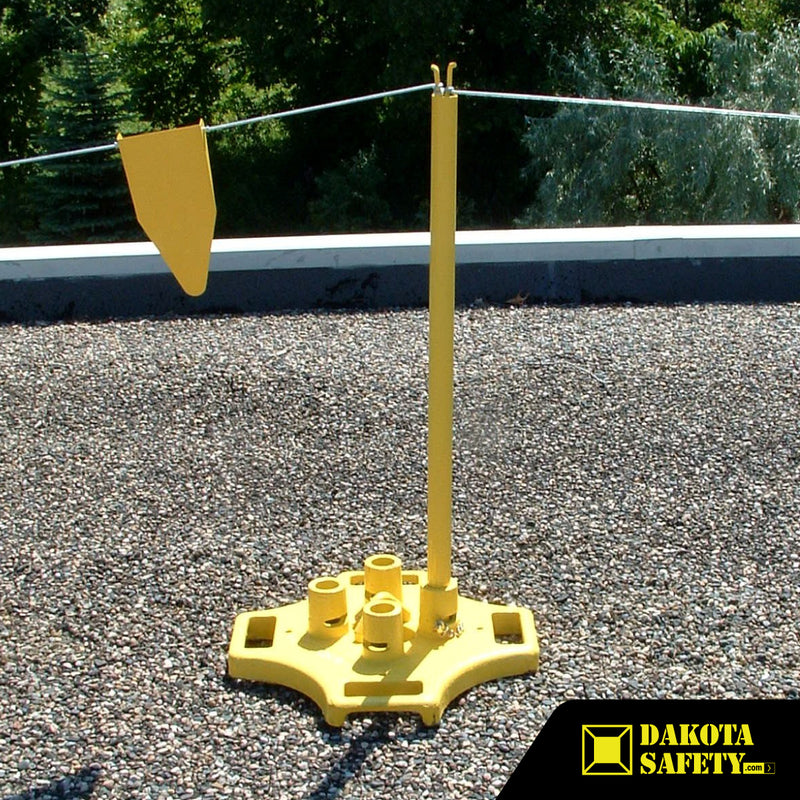
Permanent visual warning line
BEST FOR
Site-defined zones where the protection plan calls for visible boundary marking.
PermaLine uses durable metal flags and a non-penetrating support arrangement. Confirm surface suitability, layout and installation requirements. It is not a guardrail.
PermaLine Visual Warning Line System →
PLAN YOUR PROJECT
What do we need for a recommendation?
Send photos and a marked-up layout of the proposed boundary. Include these details for a project review.
- Boundary length, corners and proposed access points.
- Surface construction, condition and available support locations.
- Nearby roof edges, openings, equipment and walking routes.
- Work activities, frequency of access and the site’s protection plan.
- Exposure, maintenance access and project timeline.
Discuss your project →
PermaLine is a visual warning line, not a motion-stopping device. It does not replace guardrails or personal fall protection where these are needed. Have the application and boundary placement reviewed for the actual task and site.
